| Display cases | . |
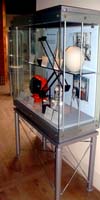
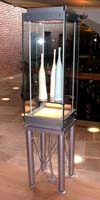
| . | To meet the requirements to protect objects whilst on display from the potential threats of exposure to light, heat, humidity, pollution, pests, physical damage and theft, it is common practice to enclose objects in a display case of some description.
Service access and into the case and security against unwanted access must also be planned when designing or commisioning display cases. The materials used in manufacture must also be specified to help reduce the build up of gases inside the case. For the most effective protection the space enclosed by the display case should by as sealed to limit the air flow from outside the case to inside. This enclosed space can be called a 'micro-environment'. The advantage of sealing this space is that the temperature, atmosphere and humidity within this micro-environment can be reliably stable, the disadvantage is that the gasses and chemicals present within the case from off-gassing of case and display materials and the objects themselves will be trapped and may harm the object further in this enclosed environment. The internal micro-environment will always be influenced by the external macro-environment the case is placed in, therefore it is always advisable to control the room and building macro-environment also, if this is feasible. A certain amount of control of the internal micro-environment is possible by the use of environmental buffering materials placed within the case, or in an adjoining compartment sealed with in the case but out of sight. In some instances it may be necessary to place a case within a case to create a more stable 'buffer' zone if the enclosing macro environment cannot be stabilised sufficiently. Silica gel is a useful buffering material to placed inside a sealed case environment to stabilise the micro environment. This must first be dried by heating to between 110ºC and 250ºC. Once placed indside the case, it should be checked and removed regularly to be reconditioned. Therefore the design of display cases must accommodate enough silica gel to condition the internal space [ 20kg per cubic metre for year round protection in a well sealed case ] and allow access for it to be removed regularly. This should be placed to provide circlation into the case but be sealed from external RH. A hydrometer should also be placed inside the case to permit monitoring without opening the case. |
. |
| A Specifiers' Guide for Display Cases |
||
| Guide to High Attack Resisting Display Cases |
||
| Display cases | . |